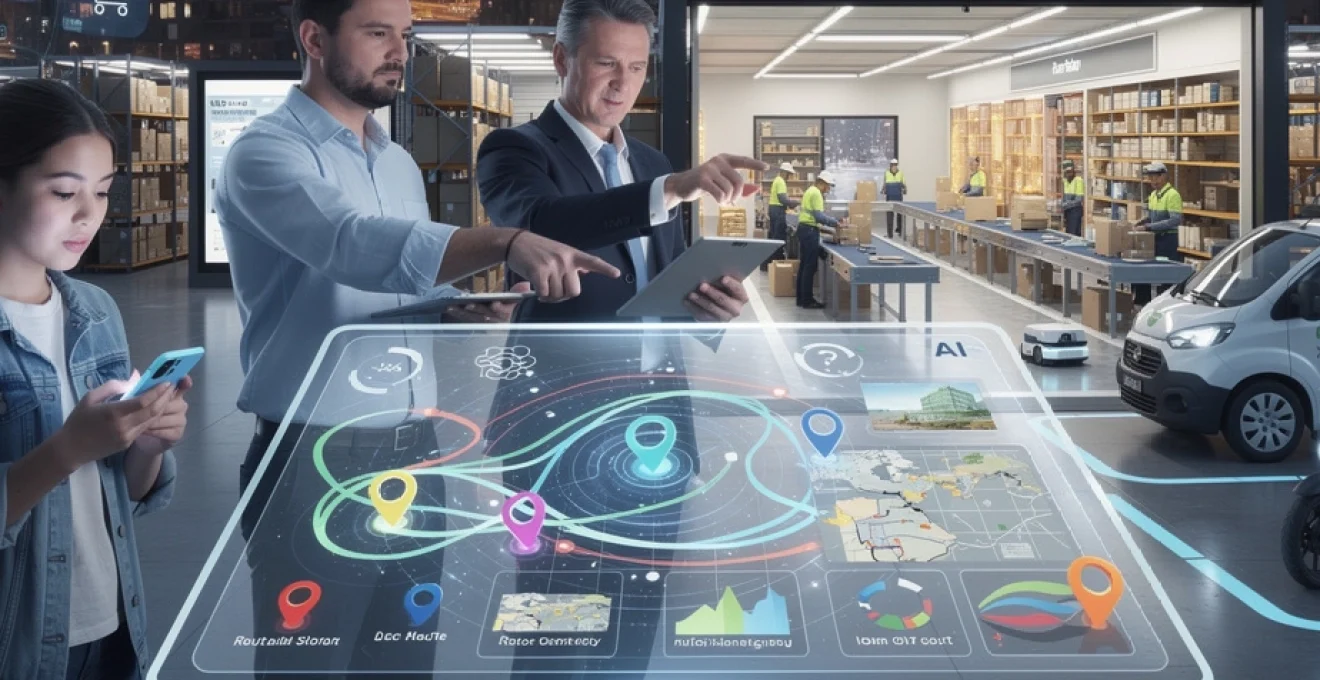
The modern business landscape has witnessed an unprecedented shift towards hyper-fast delivery services, fundamentally altering how companies approach logistics and customer satisfaction. From two-hour grocery deliveries to same-day electronics shipping, businesses across industries are racing against time to meet increasingly demanding consumer expectations. This velocity revolution isn’t merely about convenience anymore—it’s become a critical competitive differentiator that can make or break customer loyalty and market positioning. The stakes are higher than ever, with delivery speed now serving as a primary factor in purchasing decisions, often outweighing traditional considerations like price and product variety.
Consumer behaviour shifts driving Ultra-Fast delivery expectations
The transformation in consumer behaviour represents one of the most significant shifts in retail history, fundamentally reshaping how customers interact with brands and make purchasing decisions. Modern consumers have developed an insatiable appetite for immediacy, driven by technological advancements and changing lifestyle patterns that prioritise convenience above traditional shopping considerations.
Research indicates that 70% of shoppers now expect same-day or next-day delivery as standard, with 66% stating that fast delivery directly influences their purchasing decisions. This dramatic shift in expectations has created a new baseline for customer satisfaction, where businesses that fail to meet speed requirements face immediate consequences in terms of cart abandonment and customer defection.
Amazon prime’s Same-Day delivery impact on market standards
Amazon Prime has fundamentally redefined industry standards through its aggressive investment in ultra-fast delivery infrastructure. The service’s expansion of same-day delivery options has created a ripple effect across the entire e-commerce ecosystem, forcing competitors to match or exceed these delivery timeframes to remain relevant in the marketplace.
The psychological impact of Amazon’s delivery promises extends beyond mere convenience, creating an expectation normalisation where consumers begin to view rapid delivery as a basic service rather than a premium offering. This shift has resulted in traditional retailers investing billions in logistics infrastructure to compete with Amazon’s delivery capabilities.
Generation z’s instant gratification psychology in e-commerce
Generation Z consumers, having grown up in an era of instant digital gratification, exhibit fundamentally different purchasing behaviours compared to previous generations. Their relationship with time and expectation management reflects a psychology deeply influenced by social media platforms, streaming services, and on-demand entertainment that provides immediate satisfaction.
Studies reveal that 51% of younger shoppers report their delivery expectations have risen over the past year, with many willing to abandon purchases entirely if delivery options don’t meet their speed requirements. This demographic shops online 1.8 times more frequently than other age groups, making their preferences increasingly influential in shaping industry standards.
Post-pandemic shopping pattern changes and urgency demands
The COVID-19 pandemic accelerated existing trends towards online shopping while simultaneously creating new urgency demands around essential goods delivery. Consumers who previously viewed fast delivery as a luxury began treating it as a necessity, particularly for healthcare products, groceries, and household essentials.
This behavioural shift has persisted beyond pandemic restrictions, with consumers maintaining heightened expectations for delivery speed across all product categories. The normalisation of rapid delivery during crisis periods has created lasting changes in consumer psychology, where patience for traditional shipping timeframes has significantly diminished.
Social media influence on immediate purchase Decision-Making
Social media platforms have transformed shopping from a deliberate, researched process into an impulsive, immediate activity. The integration of shopping features within social platforms creates purchase opportunities that align with the instant gratification psychology prevalent in digital environments.
The phenomenon of social commerce urgency drives consumers to expect delivery speeds that match the immediacy of their purchase decisions. When customers can buy products within seconds of discovering them on social platforms, they naturally expect fulfillment processes that maintain this pace of satisfaction.
Advanced Last-Mile logistics technologies revolutionising speed
Technological innovation in last-mile logistics has become the cornerstone of businesses’ ability to deliver faster than ever before. Companies are investing heavily in cutting-edge technologies that transform traditional delivery models, enabling unprecedented speed and efficiency in getting products from distribution centres to customers’ doorsteps. These technological advancements represent fundamental shifts in how logistics networks operate, moving beyond simple transportation to create intelligent, predictive systems
Autonomous delivery drones and regulatory framework adaptations
Autonomous delivery drones have moved from experimental pilot projects to viable last-mile solutions in dense urban areas and hard-to-reach locations. Major retailers and logistics providers are testing drone networks capable of delivering small parcels within 30 minutes, dramatically reducing reliance on congested road networks. For businesses chasing ultra-fast delivery expectations, drones offer a way to bypass traditional bottlenecks and unlock new levels of delivery speed.
However, the rapid deployment of drone delivery has forced regulators to rethink long-standing aviation and safety rules. Civil aviation authorities are developing frameworks around beyond visual line of sight (BVLOS) flights, geofencing, altitude restrictions and no-fly zones to ensure drones can operate safely above cities. As these regulations mature, we are likely to see standardised approval processes, clearer liability rules and integrated traffic management systems that allow human-operated aircraft and autonomous drones to share the sky.
For retailers and courier companies, the strategic question becomes: where do drones add the most value in the delivery network? Early data suggests that ultra-fast delivery for urgent healthcare items, food, and high-value small electronics is where drone logistics currently make the most economic sense. As battery technology improves and regulatory environments become more permissive, drone delivery may expand from niche deployments into a mainstream component of last-mile logistics.
Ai-powered route optimisation systems and machine learning algorithms
AI-powered route optimisation has become one of the most powerful tools for accelerating last-mile delivery while controlling costs. Modern algorithms ingest vast amounts of real-time data—traffic patterns, weather conditions, historical delivery performance and even local events—to generate the most efficient routes for each driver or courier. Instead of static daily plans, routes are now dynamic and self-adjusting, recalculating in seconds when conditions change.
Machine learning models continuously refine these systems, learning from every completed delivery to predict future constraints and opportunities. For example, algorithms can identify which neighbourhoods are harder to access at specific times of day, or which addresses frequently require a second delivery attempt. By anticipating these issues, logistics teams can pre-empt delays, cluster stops more intelligently and reduce failed deliveries that erode customer satisfaction.
From a business perspective, AI route optimisation is the equivalent of putting a chess grandmaster in charge of your delivery fleet. The technology looks several moves ahead to minimise delays, shorten delivery windows, and support ultra-fast delivery promises. Companies that integrate AI effectively often see double-digit reductions in delivery times and fuel usage, unlocking both competitive advantage and operational savings.
Micro-fulfilment centres and dark store network expansion
Micro-fulfilment centres and dark stores have emerged as critical infrastructure for businesses trying to deliver faster than ever, especially in grocery, pharmacy and quick-commerce sectors. Unlike traditional warehouses located on city outskirts, micro-fulfilment centres are compact, highly automated hubs positioned in or near urban areas, drastically cutting the distance between products and customers. Dark stores—retail locations closed to walk-in customers but optimised for online order picking—play a similar role.
This decentralised fulfilment model allows retailers to process and dispatch orders within minutes rather than hours. Automated picking systems, conveyor belts, and robotics help staff fulfil high volumes of small orders without sacrificing accuracy. When combined with efficient courier networks, micro-fulfilment centres turn same-day and even one-hour delivery into a scalable reality for metropolitan regions.
Of course, building and operating a network of dark stores and micro-fulfilment hubs requires significant investment and meticulous planning. Retailers must decide which neighbourhoods justify localised inventory, balance stock levels across locations, and ensure accurate demand forecasting to avoid costly overstock or stockouts. Done well, this strategy can transform delivery speed from a cost centre into a powerful engine for revenue growth and customer loyalty.
Real-time inventory management through IoT sensor integration
Real-time inventory visibility is the backbone of any fast delivery strategy, and IoT sensors are rapidly becoming the preferred way to achieve it. By equipping shelves, pallets, and storage bins with connected sensors, businesses gain continuous insight into stock levels, item locations, and even product conditions such as temperature and humidity. This reduces the risk of overselling items that are no longer available and prevents last-minute order substitutions that frustrate customers.
IoT-enabled systems act like a live nervous system for the supply chain, sending instant alerts when stock levels reach critical thresholds or when goods are misplaced. Warehouse management software can then trigger automatic replenishment, re-slot fast-moving items closer to packing stations, or reroute orders to alternative locations that can fulfil them faster. For customers, this translates into more accurate delivery estimates and fewer “out of stock after order” disappointments.
Beyond warehouses, IoT devices installed in delivery vehicles provide granular tracking data, allowing you and your customers to see a parcel’s progress in real time. When integrated with customer communication tools, this data supports proactive notifications and narrow delivery windows, which are essential for a positive delivery experience. In a market where delivery reliability is judged almost as harshly as delivery speed, IoT-driven transparency is fast becoming a non-negotiable capability.
Predictive analytics for Pre-Positioning stock strategies
Predictive analytics has transformed stock positioning from a reactive process into a proactive, data-driven discipline. By analysing historical sales data, seasonal patterns, local events and even weather forecasts, advanced models can forecast demand at granular levels—down to specific SKUs and postcodes. This allows businesses to pre-position inventory closer to customers before orders are even placed, dramatically reducing delivery times.
Think of predictive analytics as your early warning radar for demand spikes. Whether it’s a new product going viral on social media or an upcoming heatwave driving beverage sales, algorithms can flag emerging trends and recommend dynamic stock reallocation. Instead of scrambling to move goods once orders surge, you already have inventory in the right locations, ready for ultra-fast dispatch.
Implementing these capabilities does come with challenges, particularly around data quality and organisational alignment. Yet for companies that get it right, the payoff is significant: lower last-mile transport costs, fewer emergency shipments, and a consistent ability to promise—and keep—faster delivery times. In an environment where small speed advantages can sway purchase decisions, predictive pre-positioning can be a decisive differentiator.
Competitive market pressures and revenue protection strategies
As ultra-fast delivery becomes a standard expectation rather than a luxury, competitive pressures have intensified across almost every consumer-facing sector. Businesses are not just racing against the clock; they are racing against each other to claim the title of fastest, most reliable delivery provider in their category. This battle for speed is directly tied to revenue protection, as slow or unreliable delivery is now one of the fastest ways to push customers into the arms of a competitor.
In this environment, speed has become a strategic lever alongside price and product selection. Organisations that can consistently deliver faster not only attract new customers but also defend their existing base from disruptive entrants and global platforms. The question many leaders are asking is no longer “should we invest in faster delivery?” but “how do we do it profitably while protecting margins and brand reputation?”
Doordash vs uber eats speed competition analysis
The food delivery sector offers a clear illustration of how speed competition plays out in real time. Platforms like DoorDash and Uber Eats have turned delivery time into a central part of their value proposition, prominently displaying estimated arrival windows and rewarding restaurants that can produce orders quickly. In many urban markets, the difference between a 20-minute and a 40-minute delivery estimate can determine which app wins the customer’s order.
Both companies invest heavily in algorithmic dispatch systems that match orders to couriers based on proximity, historical performance, and expected preparation time. They also experiment with features such as “priority delivery” and dedicated courier pools to shave minutes off the last mile. This relentless focus on speed has pushed restaurants and ghost kitchens to redesign operations, adopt smarter kitchen management tools, and even adjust menus to support faster preparation.
For businesses outside the food sector, the DoorDash vs Uber Eats battle is a useful case study. It shows how quickly a market can evolve once speed becomes a visible competitive metric—and how customer expectations can reset in a matter of months. The lesson is clear: if your sector has not yet experienced this kind of speed arms race, it is likely only a matter of time.
Customer retention rates correlated with delivery timeframes
Delivery speed and customer retention are more tightly linked than many businesses realise. Multiple studies show that a single poor delivery experience can permanently damage loyalty, with more than 80% of consumers saying they would reconsider buying from a brand after late or unreliable delivery. Conversely, when customers receive orders earlier than expected, their satisfaction and likelihood to reorder increase markedly.
Fast delivery reinforces trust at the very moment of truth in the customer journey—the point where anticipation turns into experience. When you meet or beat your promised timeframe, customers perceive your brand as competent, reliable and respectful of their time. Over repeated orders, this reliability compounds into loyalty, higher lifetime value and increased word-of-mouth referrals.
From a metrics perspective, tracking retention by delivery performance cohort can be revealing. Many retailers find that customers who consistently receive same-day or next-day delivery have significantly higher repeat purchase rates compared to those who experience slower or inconsistent service. This correlation underscores why investment in delivery speed is less about chasing vanity metrics and more about building a resilient, loyal customer base.
Market share loss prevention through velocity leadership
Velocity leadership—the ability to move products from click to doorstep faster than competitors—has become a powerful shield against market share erosion. Large marketplaces and quick-commerce startups alike use speed as a wedge to penetrate new segments, often attracting your existing customers with promises of “arrives today” or “delivered in under two hours.” If your brand cannot match or at least approach those promises, you risk losing relevance even if your products and prices remain competitive.
We’ve already seen sectors, such as fashion and electronics, where slow-moving incumbents ceded share to nimble digital natives that built fast delivery into their core proposition from day one. In many cases, it wasn’t the product range that won customers over, but the certainty of getting what they wanted quickly and predictably. Velocity leadership turned into a branding advantage, signalling modernity and customer-centricity.
Preventing market share loss therefore requires more than sporadic delivery upgrades or seasonal promotions. It demands a coherent, long-term strategy for faster delivery, including investments in fulfilment optimisation, carrier diversification, and technology integration. Businesses that treat speed as a strategic pillar rather than a tactical add-on are better placed to hold their ground as new competitors emerge.
Premium pricing models for express delivery services
While customers increasingly expect fast delivery, many are also willing to pay for ultra-fast options when the need is urgent. This opens the door to premium pricing models that both satisfy high-speed expectations and protect margins. Express tiers such as same-day, two-hour, or on-demand delivery can be offered at a surcharge, particularly for time-sensitive categories like gifts, groceries, pharmaceuticals or replacement parts.
Smart retailers use tiered delivery pricing to segment customers by urgency and value. Those who simply want free or low-cost shipping can opt for standard delivery, while customers with higher willingness to pay can choose premium express options. This approach helps subsidise the investment required to maintain ultra-fast capabilities and prevents speed from becoming an unsustainable cost centre.
The key is transparency and reliability: if you charge more for express delivery, you must consistently meet the promised timeframe. Over time, these premium services can evolve into loyalty drivers in their own right, as customers learn they can depend on you when it matters most. In some markets, subscription models—similar to Amazon Prime—bundle fast delivery with other benefits, creating recurring revenue streams that further support logistics innovation.
Supply chain infrastructure investments and operational costs
Delivering faster than ever is not just a technology challenge; it is a capital and operations challenge as well. Businesses aiming for ultra-fast delivery must invest in a blend of physical infrastructure, digital systems and process redesign, all while managing the impact on unit economics. The trade-off is straightforward: faster delivery can drive more sales and higher loyalty, but each incremental reduction in delivery time tends to raise complexity and cost.
Key investment areas include regional distribution centres, micro-fulfilment hubs, automated sorting equipment and advanced warehouse management systems. These assets shorten the physical distance to customers and speed up order processing, but they require significant upfront capital and ongoing maintenance. To make these investments pay off, organisations need sufficient order volume, accurate demand forecasting and tight coordination between procurement, operations and finance.
On the operational side, labour costs and carrier fees remain major considerations. Faster delivery often requires extended warehouse hours, additional shifts, and premium courier services—particularly for late cut-off times and weekend deliveries. Businesses must carefully model the total cost of ownership for ultra-fast delivery and identify where efficiencies, such as route optimisation or better inventory placement, can offset rising expenses. Ultimately, the goal is to design a delivery network that blends speed, reliability and cost-effectiveness in a way that supports sustainable growth rather than short-term gains.
Technology integration challenges and implementation barriers
Although new logistics technologies promise dramatic improvements in delivery speed, integrating them into existing operations is rarely straightforward. Many organisations run on legacy systems that were never designed to support real-time data flows, API connectivity or advanced automation. Connecting warehouse management, order management, carrier platforms and customer-facing tools into a single, coherent ecosystem can feel like rebuilding a plane while it’s in flight.
Common barriers include data silos, incompatible software, and fragmented processes across departments and partners. For instance, if your inventory system updates hourly but your website displays stock in real time, customers may place orders for items that are no longer available, leading to delays and cancellations. Similarly, if carrier tracking data is not accurately synced with your order management system, customers may receive outdated or conflicting delivery estimates that undermine trust.
Overcoming these challenges requires a clear integration roadmap, strong technical leadership and often, the selection of a central platform that acts as a “control tower” for logistics operations. Many businesses choose to phase their implementation, starting with high-impact use cases such as real-time tracking or automated label generation before moving into more complex automation. Change management is equally important: staff must be trained to use new tools effectively, and processes need to be redesigned rather than simply digitised. When technology, people and processes are aligned, the payoff in delivery speed and reliability can be substantial.
Future delivery speed innovations and industry predictions
Looking ahead, the race to deliver faster than ever is far from over. If anything, the baseline for what constitutes “fast delivery” will continue to shift as new technologies and business models mature. We are likely to see wider adoption of autonomous vehicles for middle-mile and last-mile transport, expanding beyond limited pilots into mainstream use in controlled environments such as industrial estates and residential communities.
Hyperlocal fulfilment networks will also become more sophisticated, blending ship-from-store, dark stores, and crowdsourced couriers into unified systems that dynamically choose the best fulfilment path for each order. Imagine an engine that automatically decides whether your order should come from a local store, a regional warehouse or even a nearby customer returning the same item, all to get it to you in the shortest possible time. As AI and predictive analytics advance, these decisions will increasingly happen without human intervention.
At the same time, sustainability pressures will shape how fast delivery evolves. Regulators and consumers alike are scrutinising the environmental impact of ultra-fast shipping, pushing companies to adopt electric fleets, consolidated delivery windows and greener packaging. The most successful businesses will be those that can balance speed with responsibility, offering rapid delivery options where they add genuine value while steering non-urgent orders towards eco-friendlier choices. In this next phase, the winners will not simply be the fastest; they will be the brands that deliver quickly, intelligently and sustainably in a world where expectations—and stakes—keep rising.