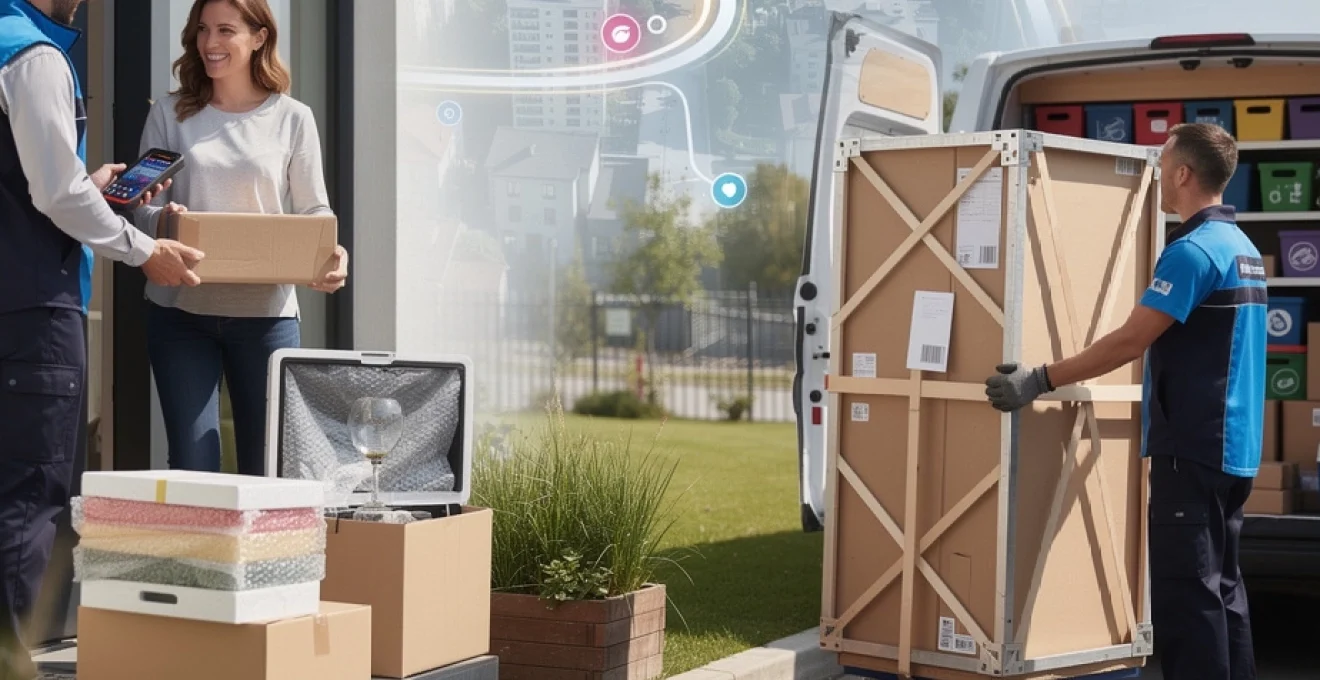
# How Careful Delivery And Customer Satisfaction Go Hand In Hand
The delivery experience has evolved from a mere operational necessity into a powerful determinant of customer loyalty and brand reputation. In today’s hyper-competitive retail landscape, where 87% of customers who experience excellent delivery service make repeat purchases compared to just 18% who encounter poor service, the correlation between careful delivery practices and customer satisfaction has never been more pronounced. Every parcel that arrives damaged, every missed delivery window, and every communication failure represents not just a logistical challenge but a potential erosion of customer trust that can take months or years to rebuild.
The stakes are remarkably high: research indicates that customers share positive delivery experiences with an average of nine people, whilst negative experiences reach sixteen people. This asymmetry underscores a fundamental truth—careful delivery isn’t simply about moving packages from point A to point B; it’s about safeguarding your brand’s reputation with every single shipment. As online shopping continues its double-digit growth trajectory and consumer expectations reach unprecedented heights, businesses must recognise that delivery carefulness directly translates into measurable customer satisfaction metrics, retention rates, and ultimately, revenue growth.
Last-mile delivery logistics: critical touchpoint for customer experience
Last-mile delivery represents the final—and often most scrutinised—stage of the customer journey. This crucial phase accounts for a substantial portion of overall logistics costs whilst simultaneously serving as the most visible manifestation of your brand’s commitment to service excellence. The last-mile experience crystallises all previous touchpoints into a single, tangible interaction that customers judge with remarkable precision. When executed with care, it transforms a transaction into a relationship; when mishandled, it can unravel months of marketing investment and customer relationship building.
The complexity of last-mile logistics stems from multiple variables converging simultaneously: traffic conditions, weather fluctuations, address accuracy, recipient availability, and driver workload all influence the final outcome. Yet despite these challenges, customers increasingly expect near-perfection. According to recent industry data, 51% of consumers report greater reliance on parcel deliveries than before recent global disruptions, whilst delivery problems have risen to affect one in three people during peak periods. This divergence between expectation and execution creates a significant opportunity for businesses that prioritise delivery carefulness as a competitive differentiator rather than viewing it as a cost centre.
Real-time package tracking systems and transparency protocols
Transparency has emerged as a non-negotiable element of modern delivery service. Real-time tracking systems serve dual purposes: they provide customers with the reassurance of knowing precisely where their purchase is located whilst simultaneously enabling logistics teams to identify and address potential delays proactively. The psychological impact of tracking visibility cannot be overstated—customers who can monitor their parcel’s progress demonstrate significantly higher satisfaction levels even when minor delays occur, simply because they feel informed and in control.
Contemporary tracking systems have evolved beyond basic location updates to incorporate predictive analytics, estimated arrival windows, and proactive delay notifications. These sophisticated platforms transform uncertainty into confidence, allowing customers to plan their day around deliveries rather than feeling held hostage by vague delivery windows. Industry leaders have demonstrated that implementing comprehensive tracking systems with geolocation capabilities and real-time updates can reduce customer service enquiries by up to 40% whilst simultaneously improving net promoter scores by 15-20 points.
Delivery time window precision and schedule adherence metrics
The precision of delivery time windows directly correlates with customer satisfaction levels. Research reveals that customers value certainty over speed—a guaranteed next-day delivery window often generates higher satisfaction than an ambiguous same-day promise. This insight challenges conventional wisdom that speed trumps all other considerations. In reality, customers predominantly seek predictability and reliability, wanting to know with confidence when their parcel will arrive so they can arrange their schedules accordingly.
Schedule adherence metrics provide quantifiable evidence of delivery carefulness. Businesses tracking on-time delivery percentages, time-window accuracy rates, and first-attempt success ratios gain invaluable insights into operational performance whilst demonstrating accountability to customers. Companies achieving 95% or higher schedule adherence consistently report customer satisfaction scores 25-30% above industry averages, proving that precision in delivery timing serves as a powerful loyalty driver that directly impacts bottom-line performance.
Route optimisation software:
Route optimisation software: impact on parcel condition
Route optimisation software is often discussed in terms of speed and cost savings, but its impact on parcel condition is just as significant. Intelligent routing reduces unnecessary detours, repetitive loading and unloading, and the number of “touches” each parcel experiences. Fewer handling events and shorter, more direct journeys translate into less vibration, stacking, and exposure to adverse weather conditions—factors that commonly cause product damage and, ultimately, lower customer satisfaction.
By leveraging algorithms that account for traffic patterns, road quality, vehicle capacity, and delivery priorities, route optimisation tools help ensure that high-risk or fragile shipments are placed on the most appropriate runs. For example, heavy and bulky items can be scheduled on routes with fewer stops, while delicate parcels may be loaded last and delivered first, reducing time under other freight. Companies that systematically use route optimisation software often see measurable drops in damage claims—sometimes by 10–20%—because every kilometre travelled is more purposeful and controlled.
From the customer’s perspective, careful routing manifests as parcels that arrive on time and in excellent condition, without crushed corners or signs of rough handling. When customers repeatedly receive goods that look like they’ve travelled “first class”, their trust in the brand solidifies. Over time, this operational discipline becomes a silent promise: not only will deliveries be punctual, but they will also be carefully managed from warehouse to doorstep.
White-glove delivery services for high-value merchandise
For high-value or sensitive merchandise—such as premium electronics, designer furniture, medical equipment, or artwork—standard delivery options are rarely enough to guarantee customer delight. This is where white-glove delivery services become a powerful extension of careful delivery strategy. White-glove offerings typically include inside delivery, unpacking, assembly or installation, packaging removal, and in some cases, initial product testing. The goal is simple: minimise customer effort while maximising the perceived value of the purchase.
These premium services are particularly impactful for products that carry high emotional or financial stakes. Imagine waiting weeks for a luxury sofa only to have it dumped at the curb, or receiving a commercial-grade printer that you must install alone. In contrast, a professional, uniformed team that arrives on time, protects floors and walls, assembles the product, and checks that everything functions correctly sends a very different signal about your brand. It says: “We understand this purchase matters deeply to you, and we will treat it accordingly.”
White-glove logistics does come with higher costs, but many retailers find that the uplift in customer satisfaction, reviews, and repeat orders more than compensates. Customers purchasing high-value items are often willing to pay a premium for peace of mind, and they tend to be vocal advocates when expectations are exceeded. As a result, white-glove delivery becomes not just a service tier, but a strategic tool for increasing loyalty in high-margin product categories.
Packaging integrity standards and their direct correlation to customer retention
Even the most optimised delivery route cannot compensate for poor packaging integrity. Packaging is the first physical touchpoint between your brand and your customer, and its condition strongly influences perceived product quality. Studies show that more than 70% of consumers associate damaged or low-quality packaging with reduced trust in the retailer, even when the product inside remains undamaged. In repeat-purchase categories, such as cosmetics, homeware, and consumer electronics, that perception can make the difference between a one-time sale and a loyal customer.
Establishing rigorous packaging integrity standards means thinking beyond simple box selection. It requires a holistic approach that considers product fragility, transit distance, stacking pressure, climate variations, and carrier handling environments. Careful delivery starts at the packing bench: when goods are cushioned, stabilised, sealed, and labelled correctly, the entire downstream logistics chain becomes more predictable. Over time, lower damage rates reduce returns, refunds, and negative reviews—three of the biggest threats to long-term customer retention.
Shock-absorbent materials: bubble wrap, foam inserts, and air pillows
Shock-absorbent materials are the frontline defence against impact damage. Options such as bubble wrap, foam inserts, corrugated inserts, and air pillows are designed to absorb and dissipate energy when parcels are dropped, stacked, or jostled in transit. The key is not simply adding more material, but using the right material in the right configuration. Over-packing can be as problematic as under-packing, leading to higher shipping costs and frustrated customers who must dispose of excessive waste.
Effective use of shock-absorbent packaging relies on product-specific testing. Drop tests, vibration simulations, and compression trials help determine how much cushioning is required to keep products within safe acceleration thresholds. For example, glassware might need snug foam inserts that prevent movement, whereas boxed electronics may be better served by strategically placed air pillows that keep them “floating” in the centre of the carton. When these standards are codified into packing guidelines and reinforced through training, damage rates and customer complaints fall sharply.
From the customer’s vantage point, careful cushioning is invisible when done well—but painfully obvious when done poorly. Opening a parcel to find a shattered mug or dented gadget does more than inconvenience the recipient; it communicates disregard for their time and money. By contrast, a well-packed item that survives a rough journey signals professionalism and respect, two pillars of long-term customer satisfaction.
Temperature-controlled packaging for perishable goods delivery
For perishable goods—such as fresh food, pharmaceuticals, or cosmetics with temperature sensitivity—packaging integrity also involves maintaining a strict thermal profile. Temperature-controlled packaging solutions, including insulated liners, gel packs, phase-change materials, and active cooling systems, are essential to preserving product quality from warehouse to doorstep. A beautifully branded meal kit or biologic medication that arrives warm instead of chilled can quickly erode trust and trigger costly replacements.
Designing effective temperature-controlled packaging starts with understanding the product’s safe temperature range and typical transit times. Simulation tools and real-world tests can model “worst case” scenarios, such as summer heatwaves or delayed handovers in depots. Based on these insights, brands can select insulation thickness, coolant type, and pack-out configurations that keep internal temperatures stable over the required duration. Many leading companies now include temperature indicators or data loggers in shipments, enabling them to verify conditions and refine their packaging standards over time.
When customers receive chilled or frozen goods that are still at the correct temperature—without leaks, condensation damage, or food safety concerns—their confidence in reordering increases dramatically. In sectors like grocery eCommerce or direct-to-consumer pharmaceuticals, consistent temperature integrity is often the single most important driver of loyalty. Put simply: if you can reliably get perishable goods to the doorstep in perfect condition, you have a customer for life.
Fragile item handling protocols: glassware, electronics, and artwork
Fragile items introduce additional complexity to careful delivery. Products like glassware, high-end electronics, and artwork are not only sensitive to shock and vibration but may also be uniquely shaped or irreplaceable. Handling protocols should therefore extend beyond packaging to encompass labelling, stacking rules, loading positions, and specialised training for pickers and drivers. A “FRAGILE” label alone is not a protocol; it is a reminder. True protection comes from embedding consistent behaviours throughout the delivery chain.
Effective fragile item handling often includes dedicated packing stations where staff follow detailed instructions for each product category. For example, glass bottles may be separated by dividers and packed upright, while framed artwork is placed in corner protectors and rigid outer boxes. In the vehicle, these shipments can be segregated in protected areas, secured with straps, and loaded last to minimise the risk of crushing. Regular audits and incident reviews help identify where protocols are being overlooked or where additional training is needed.
Customers buying fragile goods are frequently anxious about delivery outcomes, especially if the items are gifts or high-value purchases. When these items arrive intact, beautifully presented, and clearly handled with care, the emotional payoff is substantial. The experience feels less like a standard delivery and more like the safe arrival of something personal and important, reinforcing a strong emotional connection to your brand.
Sustainable packaging solutions: balancing protection with environmental responsibility
Today’s customers increasingly judge brands not only by how well goods are protected, but also by how responsibly they are packaged. Oversized boxes, unnecessary plastic, and non-recyclable materials can create a jarring disconnect between an otherwise positive delivery experience and a brand’s stated values. The challenge is to balance sustainability with protection—reducing environmental impact without compromising product safety or customer satisfaction.
Innovative solutions include right-sized packaging technology, paper-based cushioning, compostable mailers, and recycled content materials. Many retailers now use automated carton-sizing machines that create boxes tailored to each order, reducing void space and the need for excessive filler. Others are replacing traditional plastic air pillows with paper-based alternatives or moulded pulp inserts. A useful analogy is clothing: a well-tailored garment uses less fabric and looks better than one-size-fits-all; in the same way, tailored packaging uses fewer resources while actually protecting the product more effectively.
Transparency is also crucial. When you explain on the box or packing slip why certain sustainable materials were chosen, customers better understand and appreciate your efforts. Surveys consistently show that a large proportion of shoppers are willing to support brands that invest in environmentally responsible delivery practices, even if it means paying slightly more. As such, sustainable packaging is no longer just a cost consideration—it is a strategic lever for retention and brand differentiation.
Courier training programmes: building customer-centric delivery personnel
Even the most carefully designed logistics systems ultimately depend on people. Couriers and delivery drivers are the human face of your brand, often the only in-person interaction a customer will have with your company. Their behaviour at the doorstep, their care in handling parcels, and their ability to navigate unexpected issues all contribute directly to customer satisfaction. Investing in structured courier training programmes is therefore essential if you want careful delivery to become a consistent reality rather than a hopeful aspiration.
Effective training programmes go beyond basic operational instructions. They encompass safe lifting techniques, parcel handling standards, communication skills, and scenario-based problem solving. Just as airlines constantly train cabin crew to manage safety and service with equal professionalism, logistics providers must equip their drivers to handle both the physical and relational aspects of delivery. This dual focus helps create a culture where drivers see themselves not just as transporters of goods, but as guardians of the customer experience.
Proper handling techniques for parcels of varying weight classes
Improper handling is a major cause of product damage and driver injuries. Training couriers in correct handling techniques for different weight classes—light, medium, heavy, and oversized—protects both the shipment and the person delivering it. Techniques include how to lift with the legs rather than the back, when to team-lift awkward items, how to use trolleys or dollies safely, and how to position parcels in the vehicle to prevent shifting during transit.
Standard operating procedures might specify maximum single-person weights, mandatory use of lifting aids above certain thresholds, and clear guidelines for handling items labelled as fragile or top-load-only. Some companies reinforce this training with visual cues on packaging and in-vehicle diagrams showing optimal loading patterns. The impact is twofold: fewer damaged goods and lower rates of workplace injury, both of which feed directly into more reliable, careful delivery.
From a customer standpoint, watching a courier struggle or mishandle a heavy parcel can be unsettling. Conversely, when drivers move confidently, use the right equipment, and treat every package as if it were their own, customers notice. This visible professionalism reassures recipients that their order has been in capable hands from the moment it left the warehouse.
Customer communication skills: doorstep interaction best practices
How a courier interacts with customers at the doorstep can strongly influence perceived delivery quality, even when everything else goes smoothly. Simple behaviours—such as greeting the customer, confirming their name, offering to place the parcel in a convenient spot, and thanking them for their order—create a respectful, human connection. In an age where much of the shopping journey is digital, this brief offline interaction can be surprisingly impactful.
Training should cover tone of voice, body language, cultural sensitivity, and how to handle common scenarios such as late arrivals, address confusion, or minor product concerns. Role-play exercises are particularly effective at building confidence and empathy. One useful analogy is hospitality: a delivery driver who communicates clearly and courteously can elevate the experience in much the same way that a good hotel concierge does—by making the customer feel heard, respected, and valued.
These soft skills don’t just prevent complaints; they actively generate positive feedback. Many five-star reviews in eCommerce mention the delivery person by name, praising their friendliness or attentiveness. When you consider that customers are more likely to recommend a brand after a standout service interaction, it becomes clear that training couriers in communication is not optional—it is a strategic necessity.
Problem resolution authority: empowering drivers with decision-making capabilities
No delivery network is perfect. Parcels get delayed, addresses are incomplete, and customers are occasionally unavailable. In these moments, the difference between a salvaged experience and a lost customer often comes down to the driver’s ability to make informed decisions on the spot. Rigid rules that require every issue to be escalated to a call centre can frustrate both customers and staff. Empowering drivers with defined problem resolution authority is a more effective approach.
This empowerment might include allowing drivers to choose safe alternative drop locations (within policy), attempt a quick call to the customer for clarification, or reschedule a delivery in-app when necessary. The key is to provide clear boundaries and decision trees: for example, when to leave a parcel with a neighbour, when photographic proof is sufficient, and when an item must be returned to the depot. Digital tools can support this by surfacing customer preferences and instructions at the point of delivery.
When customers see that drivers are able to resolve small issues quickly and sensibly, their trust in the delivery process grows. Instead of feeling like passive recipients at the mercy of an opaque system, they experience your brand as responsive and pragmatic. Over time, this agility in the field becomes a hallmark of careful, customer-centric delivery.
Proof of delivery technology: photographic evidence and digital signatures
Proof of delivery (POD) technology has evolved rapidly, becoming a cornerstone of careful delivery strategies. Traditional signatures are now complemented—or in some cases replaced—by high-resolution photos, GPS stamps, and time-stamped digital confirmations. These tools create a shared, verifiable record of what happened at the doorstep, reducing disputes and enhancing trust for both sender and recipient.
Photographic POD is particularly valuable for “safe place” or contactless deliveries. By capturing an image of the parcel at the specified location, along with metadata such as time and coordinates, couriers can demonstrate that they followed instructions accurately. Customers, in turn, can quickly locate their parcels and feel reassured that they have not been misplaced or stolen. Many carriers also integrate these images into tracking portals, allowing recipients to view delivery photos in real time.
Digital signatures still play an important role for high-value or regulated shipments, where proof of identity is required. Modern handheld devices make it easy for drivers to capture signatures, scan IDs where necessary, and upload the information instantly to the central system. The result is a closed feedback loop: any anomalies or contested deliveries can be investigated swiftly using objective data. By combining photographic evidence and digital signatures, businesses create a robust audit trail that supports both operational excellence and superior customer service.
Failed delivery management: redelivery strategies that preserve customer trust
Even with the best planning, failed deliveries are sometimes unavoidable. Customers may be away from home, access codes might be missing, or severe weather can disrupt routes. The critical question is not whether failures happen, but how you respond when they do. Mishandled failed deliveries—such as repeated attempts without communication or unexpected returns to sender—are among the fastest ways to damage customer satisfaction and increase churn.
Effective failed delivery management starts with proactive, multi-channel communication. As soon as an issue arises, customers should receive clear notifications explaining what happened and outlining their options: schedule a redelivery, redirect to a pick-up point, or collect from a nearby depot. Many leading carriers now offer self-service portals where recipients can choose a new time slot, safe place, or alternative address. This flexibility turns a potentially negative event into an opportunity to demonstrate responsiveness and care.
In addition, analysing failed delivery data can reveal systemic issues—such as frequently problematic postcodes, incomplete address formats, or unrealistic time windows—that can be addressed upstream. Businesses that regularly review and refine their redelivery strategies often see not only fewer failures but also higher customer satisfaction when they do occur. When customers feel that you respect their time and are willing to meet them halfway, they are far more forgiving of the occasional mishap.
Quality assurance metrics: measuring delivery carefulness through KPIs and NPS scores
You cannot improve what you do not measure. To ensure that careful delivery becomes embedded in your operations, you need a robust quality assurance framework that captures both quantitative and qualitative signals. Key performance indicators (KPIs) such as on-time delivery rate, first-attempt success rate, damage rate, and failed delivery ratio provide a data-driven view of operational performance. When tracked consistently and segmented by route, product type, or carrier, these metrics highlight where carefulness is thriving and where it is breaking down.
However, operational KPIs only tell half the story. To understand how customers actually feel about your delivery service, you also need experience-focused measures like Net Promoter Score (NPS), customer satisfaction (CSAT), and customer effort score (CES). Short, post-delivery surveys—delivered via email or SMS—can capture immediate feedback on the delivery experience, including timeliness, parcel condition, and courier professionalism. Response rates are often highest when the survey is simple and arrives within hours of the delivery event.
The most successful organisations close the loop by acting on this feedback. Negative scores trigger follow-up from customer service teams, not only to resolve individual issues but also to identify recurring pain points across the network. Positive feedback, meanwhile, is shared with drivers and depot teams to reinforce best practices and celebrate success. Over time, this creates a virtuous cycle: data illuminates where to focus, targeted improvements enhance delivery carefulness, and rising satisfaction scores confirm that customers are noticing the difference.