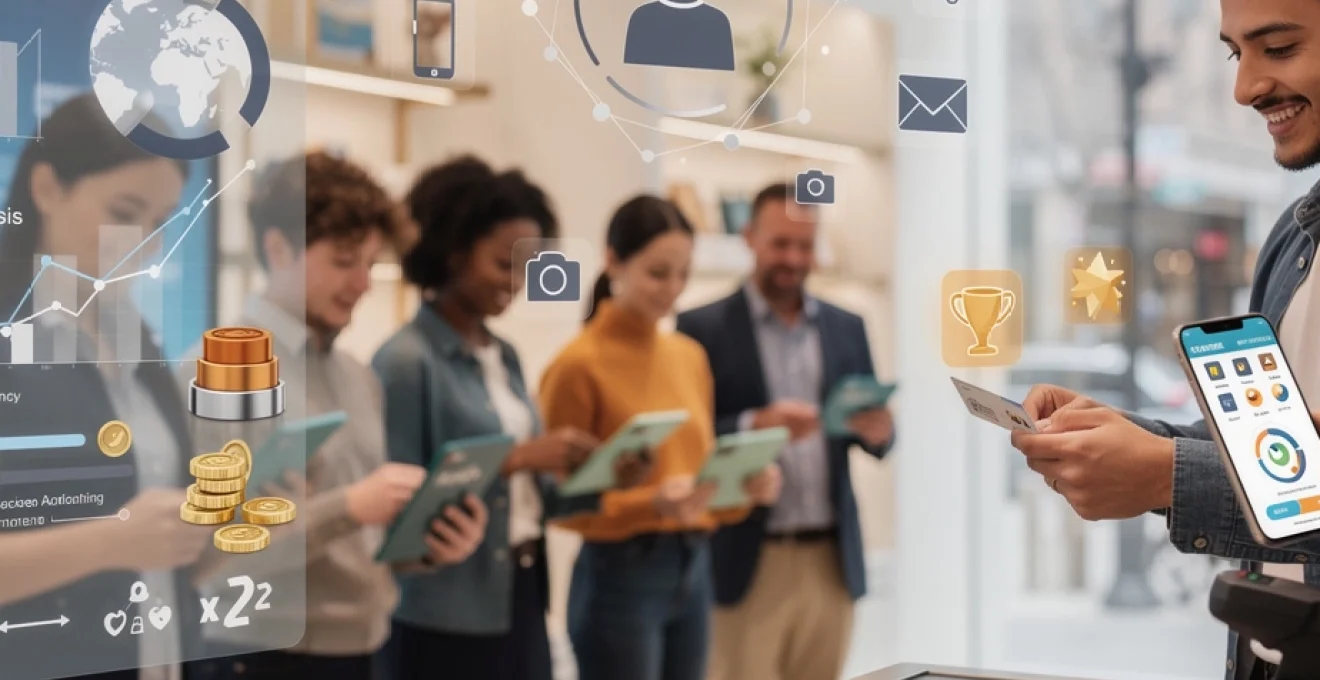
# How A Loyalty Card And BENEFITS FOR CUSTOMERS Strengthen Engagement
Customer loyalty has transformed from a simple transactional relationship into a sophisticated engagement ecosystem where every interaction counts. Modern consumers expect more than just products or services—they demand personalised experiences, meaningful rewards, and recognition for their continued patronage. Loyalty cards have evolved far beyond the paper stamp cards of yesteryear, becoming powerful digital instruments that bridge the gap between consumer expectations and business objectives. These programmes now leverage cutting-edge technology, behavioural psychology, and data analytics to create compelling value propositions that keep customers returning time and again. The strategic implementation of loyalty card systems delivers measurable benefits for both businesses and their customer base, creating a symbiotic relationship where engagement drives mutual success.
Research consistently demonstrates that acquiring a new customer costs five to twenty-five times more than retaining an existing one. This economic reality has propelled loyalty programmes to the forefront of retail strategy across virtually every sector. When executed effectively, these initiatives don’t merely encourage repeat purchases—they cultivate genuine brand affinity, transform customers into vocal advocates, and generate invaluable first-party data that fuels increasingly sophisticated marketing efforts. The benefits extend beyond immediate transaction frequency, influencing lifetime value, basket size, and even willingness to forgive occasional service shortcomings. In an oversaturated marketplace where product differentiation becomes increasingly challenging, loyalty programmes provide a competitive advantage that competitors struggle to replicate.
Customer retention metrics: tracking RFM analysis and purchase frequency through loyalty programmes
Understanding customer behaviour requires more than intuition—it demands rigorous measurement frameworks that quantify engagement patterns. RFM analysis (Recency, Frequency, Monetary) represents one of the most powerful analytical tools available to loyalty programme managers, segmenting customers based on when they last purchased, how often they buy, and how much they typically spend. Loyalty card systems automatically capture this data with every transaction, eliminating manual tracking and providing real-time insights into customer value segments. This analytical approach enables businesses to identify their most valuable customers, those at risk of churning, and opportunities for targeted intervention campaigns.
The recency metric reveals critical information about engagement momentum. A customer who purchased yesterday demonstrates higher engagement likelihood than someone whose last transaction occurred six months ago. Loyalty programmes address recency challenges through strategic communications—personalised offers timed to coincate with typical purchase cycles, reminder notifications when points are about to expire, or exclusive previews that create urgency. These interventions prevent drift and maintain top-of-mind awareness during natural purchase consideration periods.
Frequency measurements illuminate habitual shopping patterns that distinguish loyal customers from occasional buyers. High-frequency customers represent the commercial backbone of most businesses, contributing disproportionately to revenue despite representing a minority of the customer base. Loyalty programmes enhance frequency through milestone rewards, streak bonuses, and tiered benefits that increase in value as visit patterns intensify. By gamifying the shopping experience and providing tangible incentives for regular engagement, these systems transform sporadic purchasers into habitual patrons whose shopping routines incorporate your brand as a default choice.
Monetary value tracking identifies spending thresholds and basket composition preferences that inform both product assortment decisions and promotional strategy. Loyalty data reveals which products frequently appear together, optimal price sensitivity points, and category preferences that vary by customer segment. This intelligence enables hyper-targeted merchandising that presents relevant options at precisely the right moment, increasing both conversion probability and average transaction value. When you understand that a particular customer segment consistently purchases premium products, you can tailor communications emphasising quality and exclusivity rather than price-driven promotions that might actually diminish perceived value.
Tiered membership structures: from bronze to platinum status systems
Hierarchical loyalty structures tap into fundamental human psychology—the desire for status recognition and progression towards aspirational goals. Bronze, Silver, Gold, and Platinum tier systems (or their creative equivalents) create a journey narrative where customers advance through effort and engagement, unlocking progressively valuable benefits at each level. This stratification accomplishes multiple strategic objectives simultaneously: it provides clear incentives for increased spending, creates psychological commitment through invested effort, and enables differentiated service delivery that allocates resources proportionally to customer value.
Entry-level tiers typically offer modest benefits—perhaps a small welcome bonus, birthday rewards, or member-exclusive pricing on select items. These foundational perks establish the programme’s value proposition without requiring significant business investment, encouraging initial sign-
up activity from the customer. As members climb into higher tiers, benefits usually become more compelling—priority customer service, free shipping, extended returns, or enhanced earn rates that accelerate point accumulation. The perceived gap between tiers is crucial; if progression feels unattainable or the incremental value appears negligible, motivation quickly fades. A well-calibrated status system uses clear thresholds and visible progress indicators so customers always understand what they need to do next to reach the following level.
Advanced programmes increasingly employ dynamic tiering linked to rolling 6–12 month spend windows rather than fixed calendar years. This approach maintains urgency and prevents complacency, as members must sustain engagement to retain their hard-earned status. Some retailers introduce “soft landings,” where customers who narrowly miss a renewal threshold drop only one tier rather than exiting the structure entirely, preserving goodwill and reducing perceived penalty. When combined with thoughtful communications—such as mid-cycle progress updates and “you’re almost there” nudges—tiered membership structures can significantly increase annual spend and visit frequency while deepening emotional commitment.
Points-based accumulation models: earning mechanisms and redemption thresholds
At the heart of many loyalty card systems sits a points-based accumulation model, converting everyday purchases into a currency that feels both tangible and aspirational. The simplicity of “earn X points per £1 spent” remains powerful, but the most effective programmes layer in nuanced earning mechanisms that reward specific behaviours, such as trying new categories, shopping during quieter trading periods, or choosing click-and-collect over home delivery. By adjusting earn rates for these behaviours, you can subtly steer customers towards actions that support operational efficiency and margin management.
Redemption thresholds play a decisive role in shaping perceived value. If customers must spend months accumulating points before they can claim even a minor reward, frustration and disengagement are almost inevitable. Conversely, overly generous redemption rates may spike short-term uptake but undermine programme sustainability. A balanced approach offers a ladder of attainable rewards—small but frequent redemptions to maintain momentum, alongside higher-value goals that feel worth striving for. Many leading retailers now use micro-rewards, such as instant discounts, coffee vouchers, or digital scratch cards, triggered at low thresholds to keep engagement high between larger milestones.
Transparency is essential. Clear, easy-to-understand rules about point expiry, earn caps, and exclusions reduce customer service friction and prevent disappointment at checkout. Publishing examples—“spend £50 on groceries and receive 500 points, enough for £5 off your next shop”—helps customers quickly calculate the real-world benefit of participation. When customers understand how to maximise their points and can see tangible benefits early in their journey, participation rates and average basket sizes both increase.
VIP access and experiential rewards: exclusive event invitations and early product launches
As loyalty markets become saturated, experiential rewards are emerging as a key differentiator that strengthens engagement beyond pure discounting. Rather than competing solely on financial incentives, brands are increasingly offering VIP access to events, exclusive masterclasses, private sales, and early access to product launches. These experiences tap into customers’ desire for recognition and belonging, transforming a loyalty card from a simple savings mechanism into a gateway to a branded lifestyle.
For example, a beauty retailer might invite top-tier members to closed-door preview evenings where they can test new product lines before general release, accompanied by expert consultations. A grocery chain could offer cooking workshops led by well-known chefs, accessible only to Gold or Platinum members who redeem a set number of points. These experiences create memorable moments that customers are likely to share on social media, amplifying brand reach and reinforcing the perception that membership offers more than monetary value.
To maximise impact, experiential rewards should be tightly aligned with your brand’s core proposition and the interests of your most valuable segments. Capacity constraints—such as limited event spaces—can actually enhance perceived exclusivity if managed transparently via waitlists and tier-based priority. When customers feel they are gaining insider status, their emotional loyalty surges, making them less price sensitive and more likely to defend and recommend your brand within their networks.
Cashback versus store credit: comparing monetary reward frameworks
Monetary rewards remain central to many loyalty cards, but businesses must carefully choose between cashback and store credit frameworks. Cashback, often delivered as bank transfers or bill credits, offers ultimate flexibility from the customer’s perspective: funds can be used anywhere, for any purpose. This universality makes cashback highly attractive, particularly in cost-of-living constrained environments where every pound counts. However, because the benefit is not ring-fenced to your ecosystem, it may provide weaker reinforcement of repeat patronage.
Store credit, by contrast, keeps value within your brand, effectively pre-allocating future spend and increasing the likelihood of repeat visits. Credit can be framed as a “cash pot,” digital wallet balance, or promotional voucher to be used on subsequent purchases. This approach often generates a psychological “found money” effect, encouraging customers to trade up or add incremental items to their basket when redeeming, which can offset the cost of the reward. The key is to ensure that redemption experiences are seamless and that restrictions do not feel punitive or confusing.
Many sophisticated programmes adopt hybrid structures, offering default store credit with the option for elite members to convert balances into cashback at preferential rates. This creates a sense of privilege while maintaining strong incentives for the majority of customers to reinvest their rewards with you. When modelling different frameworks, it is crucial to account not only for direct reward costs but also for secondary effects such as increased visit frequency, higher average order values, and improved retention rates.
Partnership coalitions: multi-brand loyalty networks like nectar and avios
Coalition loyalty networks such as Nectar and Avios illustrate how multi-brand partnerships can dramatically expand the utility of a loyalty card for customers. By enabling members to earn and redeem points across supermarkets, fuel stations, travel providers, and online retailers, these schemes embed themselves into daily life, accumulating value quickly and reinforcing habitual use. For participating brands, coalition programmes offer access to a broad shared customer base and rich cross-merchant data that would be difficult and expensive to gather independently.
From the customer’s perspective, coalition schemes reduce fragmentation. Instead of juggling multiple cards and apps, they can consolidate spending into a single currency that accumulates more rapidly and unlocks more substantial rewards. This perceived acceleration of value creation is a powerful engagement driver, particularly for budget-conscious households seeking to stretch their spending. For businesses, the trade-off lies in ceding some control over the customer relationship and reward structure to the coalition operator in exchange for increased reach and data-sharing opportunities.
When evaluating coalition participation, brands should assess strategic fit: do partner merchants attract similar target segments, and will association enhance or dilute your positioning? It is also important to ensure that data governance and consent frameworks meet regulatory requirements while still allowing for meaningful analytics and targeted marketing. When executed thoughtfully, coalition membership can act as a force multiplier for your loyalty efforts, boosting acquisition while still enabling tailored experiences within your own branded environment.
Digital wallet integration: apple wallet, google pay, and mobile-first card management
As smartphones become the primary interface for commerce, integrating loyalty cards with digital wallets like Apple Wallet and Google Pay has shifted from a “nice-to-have” to a baseline expectation. Mobile-first card management removes friction from the loyalty experience: customers no longer need to carry physical cards or remember membership numbers, as their loyalty ID appears automatically at checkout or when tapping to pay. This ease of access directly influences participation rates, particularly among younger demographics who expect seamless, app-driven interactions.
Digital wallet integration also enables richer, context-aware engagement. Passes stored in Apple Wallet, for example, can update in real time to reflect points balances, tier status, or personalised offers, turning the wallet itself into a dynamic communication surface. Push notifications triggered by changes—such as “You’ve just reached Gold status” or “£10 in loyalty credit now available”—reinforce progress and encourage immediate redemption. Because these messages appear in a channel that customers already use for payments and boarding passes, they often achieve higher visibility than traditional email campaigns.
From an operational perspective, mobile-first loyalty cards can significantly reduce issuance and replacement costs associated with plastic cards, while also supporting sustainability objectives. They dovetail naturally with scan-and-go checkout, self-service kiosks, and QR code-based engagement in-store. To capitalise fully, ensure your POS systems, e-commerce platform, and loyalty engine are tightly integrated so that customers receive consistent recognition and benefits regardless of whether they tap a phone, scan a barcode, or log in online.
Personalised offers through behavioural segmentation and purchase history data
The true power of a loyalty card lies in the data it generates. Every scan, swipe, or tap adds another piece to the puzzle of who your customers are, what they value, and how they prefer to shop. Behavioural segmentation groups customers based on observed actions—such as product categories shopped, time-of-day preferences, responsiveness to promotions, and channel usage—rather than relying solely on demographics. This allows you to deliver personalised offers that feel relevant rather than intrusive, significantly increasing engagement and conversion rates.
For instance, a customer who routinely purchases plant-based products and premium health items should not receive the same loyalty offers as someone primarily focused on low-cost bulk buys. By aligning promotions with demonstrated preferences, you not only increase the likelihood of redemption but also show that you understand and respect individual choices. Over time, this fosters trust and emotional loyalty, which can be far more resilient than purely transactional incentives. The challenge, of course, is operational: how do you scale such personalisation across thousands or millions of members in real time?
Machine learning algorithms: predictive modelling for targeted promotions
This is where machine learning algorithms become indispensable. Predictive models can analyse historical purchase data, browsing behaviour, and engagement signals to forecast what each customer is likely to buy next, how sensitive they are to discounts, and which communication channels they prefer. Rather than sending blanket promotions, you can deploy targeted campaigns—such as cross-sell recommendations, replenishment reminders, or win-back offers—only to the individuals most likely to respond. This reduces marketing waste while improving the overall customer experience.
Imagine treating your loyalty platform like a recommendation engine similar to those used by leading streaming services. Instead of suggesting films, your system proposes relevant products, bundles, or services, tailored to each member’s unique profile. Machine learning models can also optimise offer depth, ensuring that high-value customers who are already loyal receive recognition without unnecessary margin erosion, while more price-sensitive or at-risk segments receive stronger incentives to re-engage. Continuous A/B testing allows these models to learn and refine over time, further increasing accuracy.
Of course, advanced analytics must be underpinned by robust data governance and privacy practices. Transparent communication about how data is used, coupled with clear consent mechanisms and opt-out options, is non-negotiable in a landscape shaped by GDPR and similar regulations. When customers understand that sharing data through a loyalty card results in genuinely better, more convenient experiences—rather than indiscriminate advertising—they are far more inclined to participate enthusiastically.
Geolocation-based triggers: proximity marketing and in-store push notifications
Geolocation capabilities add another layer of relevance to loyalty-driven engagement. By using opt-in location data from your mobile app or digital wallet passes, you can trigger proximity-based experiences that bridge online and offline channels. For example, when a loyalty member walks within a defined radius of one of your stores, they could receive a push notification highlighting a personalised in-store offer, a reminder of unredeemed credit, or an invitation to participate in a nearby event. This kind of timely prompt can nudge undecided customers into visiting and purchasing.
Inside the store, beacons or Wi‑Fi-based location services can refine this approach further. You might surface category-specific promotions when customers enter particular aisles, or prompt them to scan their loyalty card at digital kiosks to reveal surprise rewards. Think of it as the digital equivalent of a helpful store associate who remembers your preferences and points out relevant deals as you browse. When executed sensitively, proximity marketing transforms a standard shop visit into a curated experience that feels personal rather than generic.
However, there is a fine line between helpful and intrusive. Bombarding customers with constant notifications risks “alert fatigue” and app uninstalls. Best practice is to allow granular controls—letting users choose whether they want general store alerts, hyper-local offers, or only high-value notifications such as expiring rewards. Clear explanations about how geolocation enhances the loyalty card experience, combined with easy opt-out options, will help ensure customers view proximity marketing as a benefit rather than a privacy concern.
Birthday rewards and anniversary milestones: automated lifecycle marketing campaigns
Lifecycle marketing campaigns anchored around personal milestones—birthdays, membership anniversaries, first purchase anniversaries—are simple yet powerful ways to humanise your loyalty programme. Automated systems can detect these dates and trigger tailored communications, such as “Happy Birthday” emails with bonus points, free treats, or exclusive discount codes valid for a limited period. Because these messages are framed as celebrations rather than sales pushes, they often enjoy higher open rates and redemption levels than standard promotional content.
Anniversary rewards can reinforce the longevity of the customer–brand relationship. A message acknowledging “one year since you joined our loyalty family” or “your 10th shop with us” reminds customers of the history you share, subtly increasing the perceived cost of switching to competitors. You might offer escalating benefits as milestone counts increase—extra points at the 5th visit, a complimentary upgrade at the 10th, and a personalised gift at the 25th. This structure mirrors the satisfaction of collecting badges or achievements in a game, turning routine purchases into a longer-term narrative of progress.
The beauty of milestone campaigns is their scalability. Once configured, they run in the background, ensuring every member receives timely recognition without requiring manual intervention. When combined with other behavioural signals—such as a drop in visit frequency—you can further refine messaging, for example, by pairing a birthday treat with a win-back incentive for lapsed customers. In this way, lifecycle automation helps ensure that your loyalty card delivers both emotional connection and measurable commercial impact throughout the customer journey.
Gamification mechanics: progress bars, badges, and challenge-based engagement tactics
Gamification has become a core pillar of modern loyalty card design, leveraging mechanics from video games and fitness apps to make everyday shopping more engaging. Progress bars that show how close a member is to their next reward or tier upgrade provide a clear visual cue that encourages “just one more purchase” behaviour. Badges and achievements—earned for milestones such as visiting multiple store locations, trying new categories, or engaging with sustainability initiatives—tap into intrinsic motivations like mastery and exploration.
Challenge-based engagement, where members are invited to complete specific missions within a defined timeframe, adds an element of excitement and urgency. For example, a grocer might set a “Healthy Start” challenge encouraging customers to buy fruit and vegetables three times in a month to earn bonus points, while a fashion retailer could run a “New Season Explorer” mission for trying items from the latest collection. These gamified structures give shape and purpose to routine shopping trips, transforming them into activities that feel playful and rewarding.
Importantly, gamification should enhance rather than overshadow the core value of your loyalty programme. Overly complex rules or gimmicky mechanics can confuse customers and dilute focus. The most successful implementations keep interfaces simple, provide instant feedback on progress, and ensure that every game element ties back to clear, tangible benefits—whether that is rewards, recognition, or access. Done well, gamification can significantly increase app engagement, visit frequency, and share of wallet, particularly among digital-native audiences.
Streak bonuses and consecutive visit rewards: building habitual shopping patterns
Streak mechanics—rewarding customers for consecutive visits or purchases within defined windows—are particularly effective at establishing habitual shopping patterns. Much like language-learning apps that celebrate daily practice, loyalty programmes can grant escalating bonuses when members maintain consistent engagement: double points on the third consecutive visit, a free item after five weeks of continuous participation, or a tier boost if a spend threshold is met every month for a quarter. These structures encourage customers to anchor their weekly routines around your brand.
Psychologically, breaking a streak often feels like a loss, even when the rational cost is minimal. By visualising streaks within your loyalty app or digital wallet pass—using calendars, flames, or checkmarks—you tap into loss aversion, motivating customers to keep the chain going. However, it is wise to build in occasional “grace days” or easy ways to recover a broken streak, particularly during holidays or unexpected events. Otherwise, the disappointment of losing progress can lead to disengagement rather than renewed effort.
From a commercial perspective, streak bonuses can be scheduled to support lower-traffic days, gently shifting demand from peak to off-peak and smoothing operational load. For example, rewarding midweek visits more heavily than weekend ones can help balance footfall. When carefully aligned with your capacity and revenue management goals, streak mechanics provide a low-friction, customer-friendly way to improve both loyalty and operational efficiency.
Referral incentive programmes: dual-sided rewards for customer acquisition
Referral programmes harness your existing loyal customers as a powerful acquisition channel by rewarding them for introducing friends and family. Dual-sided incentives—where both the referrer and the new customer receive benefits—tend to perform best because they create a shared win. For instance, offering £5 in loyalty credit to both parties when the new customer makes their first purchase aligns motivations and reduces any perceived awkwardness in sharing referral links or codes.
Integrating referral capabilities directly into your loyalty app or digital card interface makes the process frictionless. Members can generate personal links, share them via messaging apps or social platforms, and track their referral status in real time. This transparency builds trust and keeps referrers engaged as they wait for rewards to unlock. To deter fraud and ensure sustainability, many programmes tie referral rewards to qualifying spend thresholds or limit the total number of bonuses per member within a given period.
Because referred customers often exhibit higher lifetime value and stronger initial trust in the brand, referral incentives can deliver a significantly lower effective acquisition cost than paid media. The data generated—who refers whom, which channels drive the most conversions, and how referred cohorts behave over time—also feeds back into your broader loyalty analytics. In this way, referrals turn your most engaged members into active brand ambassadors while reinforcing the utility of the loyalty card itself.
Social sharing features: instagram integration and user-generated content amplification
Social media integration extends the reach of your loyalty card beyond transactional contexts, embedding it into your customers’ digital lives. By making it easy to share rewards milestones, event experiences, or exclusive product access on platforms like Instagram and TikTok, you invite members to co-create your brand narrative. For example, you might encourage members to post photos of their latest reward redemption using a branded hashtag, in return for entry into monthly prize draws or bonus points for featured content.
These user-generated content (UGC) campaigns serve as authentic endorsements that resonate more strongly than traditional advertising. Seeing peers showcase how they use their loyalty benefits—whether it is a complimentary coffee, a VIP event, or an early access haul—creates social proof and sparks curiosity among non-members. Embedding “share your reward” prompts directly into your app or post-purchase confirmation screens simplifies participation and increases uptake.
Of course, it is important to respect customer preferences and avoid over-pressuring them to broadcast every interaction. Offering social sharing as an optional, occasionally incentivised action rather than a requirement maintains goodwill. Monitoring and curating UGC also helps you surface the most compelling stories while ensuring alignment with brand guidelines. Over time, a well-managed social layer around your loyalty card can evolve into a vibrant community that reinforces engagement and advocacy.
Limited-time multiplier events: double points days and flash bonus opportunities
Limited-time multiplier events—such as double or triple points days, flash bonuses for specific categories, or time-bound “spend X, get Y extra points” promotions—inject bursts of excitement into your loyalty calendar. These events create urgency, encouraging customers to bring forward planned purchases or consolidate spend with your brand rather than competitors. When communicated effectively through email, push notifications, and in-store signage, they can drive significant uplift in traffic and basket size over short windows.
Strategically, multiplier events are most effective when used sparingly and aligned with key commercial priorities. You might schedule them around new product launches, seasonal peaks, or quieter trading periods where incremental volume is especially valuable. Targeted multipliers—offering enhanced earn rates only to specific segments, channels, or product ranges—allow you to fine-tune impact while controlling costs. For example, a fashion retailer could offer double points on new-season items to early adopters, while a grocer might use flash bonuses to move surplus inventory.
As with any promotional mechanic, clarity is essential. Customers should immediately understand when the event runs, what qualifies for the bonus, and how soon they will see extra points reflected in their account. Visual countdowns and post-event summaries—“You earned 1,200 bonus points during Double Points Weekend”—help reinforce the value they received and prime them for future participation. Overuse, however, can lead to promotional fatigue or train customers to delay purchases until the next event, so maintaining balance is critical.
Omnichannel synchronisation: unified customer profiles across in-store and e-commerce touchpoints
In a world where customers fluidly move between online and offline channels, a loyalty card must operate as the connective tissue that unifies the entire experience. Omnichannel synchronisation ensures that whether a customer shops via mobile app, desktop site, physical store, or third-party marketplace, their activity contributes to a single, coherent profile. This unified view underpins accurate RFM analysis, enables consistent earn-and-burn mechanics, and prevents frustrating discrepancies in points balances or tier status.
From the customer’s vantage point, omnichannel loyalty feels effortless: they can start a purchase journey by browsing online, add items to a wishlist, and then complete the transaction in-store while still earning the same rewards. Click-and-collect orders, returns, and exchanges all seamlessly update their account. Service agents—whether in-store associates or contact centre staff—can access a consolidated history, allowing them to offer tailored recommendations or resolve issues without asking repetitive questions. This consistency signals professionalism and respect for the customer’s time, both of which strengthen engagement.
Delivering this level of synchronisation typically requires integrating your loyalty engine with core systems such as POS, e-commerce platforms, CRM, and marketing automation tools. Data flows must be near real-time so that, for example, points earned in-store appear in the app within minutes, and online redemptions are recognised at the till. While the technical undertaking can be significant, the payoff is substantial: brands with mature omnichannel loyalty programmes consistently report higher customer lifetime value, lower churn, and greater resilience to competitive pressures. When every interaction—regardless of channel—feels like part of one coherent relationship, your loyalty card evolves from a simple rewards mechanism into the backbone of a truly customer-centric engagement strategy.